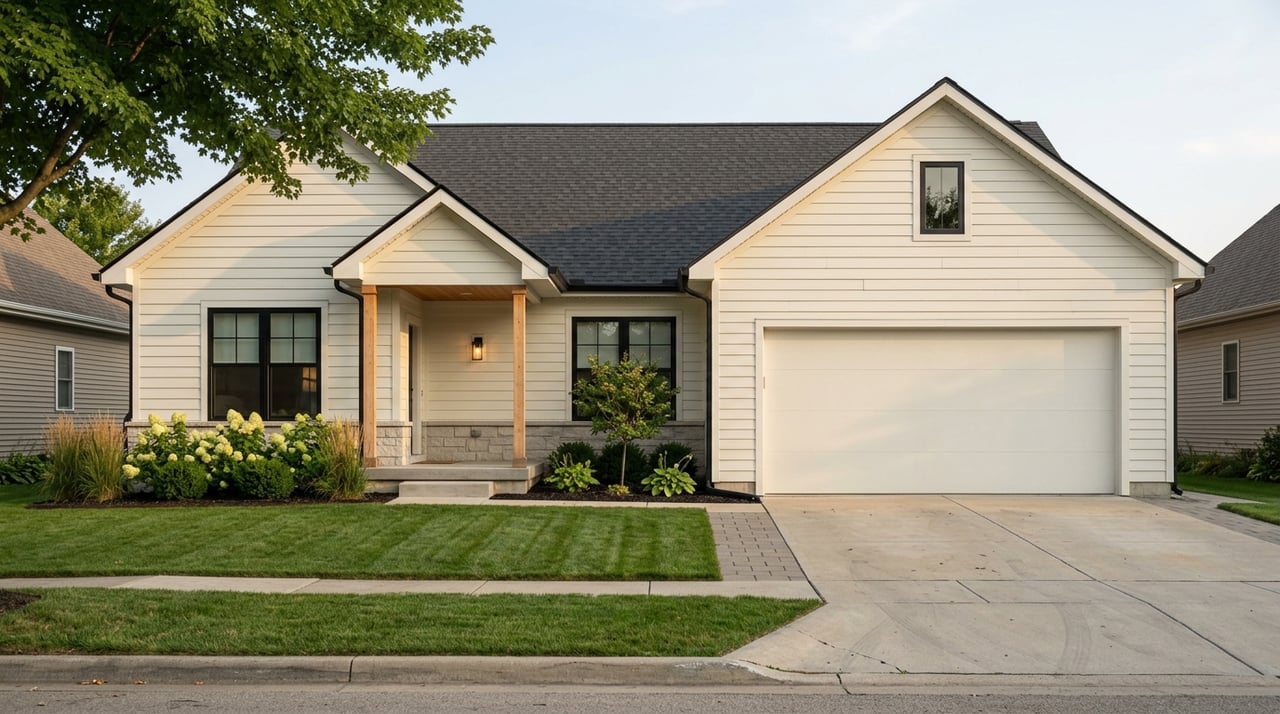
Buying a home in DeWitt can feel simple when you look at the list price and mortgage payment alone, but that is only part of the picture. Your real monthly cost can shift quite a bit based on property taxes, utility setup, sewer billing, and parcel-specific charges. If you want a clearer budget before you buy, this guide breaks down what really drives the cost of owning a home in DeWitt. Let’s dive in.
Why DeWitt ownership costs vary
In DeWitt, one of the biggest cost differences is whether the home is in the City of DeWitt or DeWitt Charter Township. Local millage rates are different, and some utility billing patterns are different too.
That means two homes with similar prices can carry very different monthly ownership costs. Before you compare properties, it helps to confirm the exact municipality, school district, and utility setup for the address.
Property taxes are a major cost
For many homeowners, property taxes are one of the largest fixed costs after the mortgage. In DeWitt, taxes depend on taxable value, millage rate, and whether the property qualifies as a principal residence.
Michigan property taxes are based on taxable value, not market value. The City of DeWitt assessor notes that assessed value is 50 percent of true cash value, taxable value growth is capped by the lesser of 5 percent or CPI, and a transfer of ownership can uncap the property.
How PRE status affects taxes
If a home qualifies as a Principal Residence Exemption, often called PRE or homestead status, the tax rate is typically lower than a non-homestead property. This can create a meaningful difference in your monthly budget.
That is why buyers should not assume the current tax bill will stay the same after closing. If ownership transfers and taxable value changes, the future bill can look different from the seller’s current numbers.
2025 City of DeWitt tax snapshot
The City of DeWitt 2025 homestead total is 44.857 mills. The non-homestead total is 62.857 mills.
Using the published millage rate, a home with a taxable value of $150,000 would come out to about $6,728.55 per year, or about $560.71 per month, before any special assessments or other exemptions. This is a simple illustration based on the posted millage rate, not a quoted tax bill.
2025 DeWitt Township tax snapshot
In DeWitt Charter Township, PRE totals vary by school district. For 2025, the township page lists 38.2039 mills for DeWitt Schools and 36.1532 mills for Bath Schools.
Using the DeWitt Schools PRE example, a home with a taxable value of $150,000 would come out to about $5,730.59 per year, or about $477.55 per month, before special assessments or other exemptions. That is a noticeable difference from the city example, even at the same taxable value.
Tax timing matters too
Payment timing can affect your cash flow, especially if you escrow taxes or plan to pay directly. In DeWitt Township, summer taxes are levied July 1 and winter taxes December 1.
The City of DeWitt payment page says summer taxes are due September 30 and winter taxes are due February 14. The township also notes that delinquent sewer accounts, annual drain, streetlight, sidewalk, and other special assessments can be placed on the winter tax roll.
Utilities can add more than expected
Utilities are where many buyers underestimate monthly ownership costs. In DeWitt, the details depend on whether the home is in the city or township and whether it is served by municipal systems.
A smart way to think about utilities is to split them into fixed local charges and usage-based charges. Fixed charges may include water service fees, sewer billing, and city trash or recycling charges, while usage-based costs include gas and electricity.
Gas and electric service
Consumers Energy includes both DeWitt city and township in its service territory. For residential gas, Consumers lists a $17 monthly customer charge, a $5.7786 per Mcf distribution charge, and a June 2026 gas-cost-recovery factor of $3.5859 per Mcf.
Electric pricing is plan-based, with options such as Summer Peak, Smart Hours, Nighttime Savers, and non-transmitting-meter service. Because electric costs depend on the plan and account details, buyers should verify the setup for the specific property.
City of DeWitt water, sewer, and trash
In the City of DeWitt, about half the city is on municipal water. Lansing Board of Water & Light reads meters and sends monthly bills for water.
The city bills trash, recycling, and sewer quarterly. The city’s 2025-2026 budget lists sewer billing at $79.98 per REU per quarter and refuse and recycling at $49.73 per quarter, which works out to about $43.24 per month before water or electricity.
BWL’s 2025 residential water rate for a 5/8-inch or 3/4-inch meter includes a $17.86 monthly basic service charge, plus $4.23 per CCF for the first 2 CCF and $7.25 per CCF above that. So even before water usage, a city home on municipal water starts with several recurring charges.
DeWitt Township water and sewer
In DeWitt Charter Township, public water is provided by Lansing Board of Water & Light and sanitary sewer by SCCMUA. Township sewer bills are quarterly in advance.
A township e-news item states that 2026 quarterly sewer fees remain $115 per REU per quarter. That works out to about $38.33 per month on a quarterly-equivalent basis, and the township says delinquent sewer balances get a 10 percent fee.
A simple starting-point example
Using only the known local fees, a City of DeWitt home on municipal water starts with roughly $43.24 per month in city sewer, trash, and recycling charges. Add at least $17.86 per month for BWL water service and $17 per month for the Consumers gas customer charge before usage.
That means you already have a base level of recurring utility-related costs before you turn on lights, heat the home, or use water. In the township, the sewer charge alone is about $38.33 per month on a quarterly-equivalent basis, before other utility costs are added.
Insurance and maintenance belong in your budget
Homeownership costs do not stop at taxes and utilities. Insurance and ongoing upkeep are part of the real monthly cost, even if they are not billed the same way every month.
Bankrate’s 2026 homeowners insurance analysis puts the Michigan average at $2,368 per year for a policy with $300,000 in dwelling coverage. Actual premiums vary by property and coverage choices, but this gives buyers a useful planning baseline.
Maintenance is not a surprise cost
Maintenance is one of the most important costs to budget for early. Bankrate’s 2025 hidden-cost study found that the average annual cost of owning and maintaining a typical single-family home in the U.S. is $21,400, and it identified maintenance as the single biggest hidden cost.
For a DeWitt buyer, that means it is wise to treat things like the roof, HVAC, water heater, driveway, gutters, exterior work, and landscaping as recurring ownership expenses. They may not hit every month, but they should still be part of your long-term plan.
HOA fees and special assessments can change the math
Not every home in DeWitt has an HOA or similar fee. The city and township materials reviewed do not show a single blanket HOA-style charge that applies to all homes.
Still, some homes may have parcel-specific costs tied to a subdivision, condo association, private road, drainage system, or similar setup. Those charges should be confirmed in the subdivision documents or title work before an offer is written.
Watch for assessment-style charges
Even without an HOA, some owners may still face extra costs. The township explicitly states that delinquent sewer accounts, annual drain, streetlight, sidewalk, and other special assessments can be placed on the winter tax roll.
That means a property can carry extra charges that do not show up in the list price alone. It is one more reason to review the full property details before making a decision.
How to estimate your true monthly cost
If you want a clearer ownership picture, start by separating fixed local charges from variable costs. Fixed local charges often include property taxes, sewer, water base charges, and city trash or recycling billing.
Variable costs usually include electric usage, gas usage, insurance pricing, and maintenance. This simple split can help you build a budget that reflects how the home will actually feel month to month.
A practical DeWitt buyer checklist
Before you buy a home in DeWitt, make sure you verify:
- Whether the property is in the City of DeWitt or DeWitt Charter Township
- The school district tied to the parcel
- Whether the home qualifies for PRE status
- The current taxable value and whether a transfer could uncap it
- The water and sewer provider for that address
- Any quarterly sewer, trash, or recycling charges
- Any special assessments, drain charges, or streetlight charges
- Any HOA, condo, private road, or similar association dues
These items can move your monthly budget more than interest rate changes alone. A home that looks affordable at first glance may feel different once the local costs are added in.
Why this matters when you compare homes
When buyers compare homes, they often focus on sale price and mortgage payment first. In DeWitt, that can lead to an incomplete picture.
A home in the city may have different tax and utility costs than a similar home in the township. A property with special assessments or association fees may also cost more to own than a nearby home with a similar list price.
That is why careful local guidance matters. Looking at the full ownership picture can help you buy with more confidence and fewer surprises after closing.
If you are planning a move in DeWitt, it helps to have someone walk through the details with you, from taxes and utility patterns to parcel-specific fees that can affect your budget. When you want a local, relationship-first guide, connect with Heidi Smith for a free consultation.
FAQs
How are property taxes calculated for a home in DeWitt?
- Michigan property taxes are based on taxable value rather than market value, and the final amount depends on the local millage rate, PRE status, and any parcel-specific assessments.
What is the 2025 homestead millage rate in the City of DeWitt?
- The City of DeWitt 2025 homestead total is 44.857 mills.
What is the 2025 PRE millage rate in DeWitt Township?
- In DeWitt Charter Township, 2025 PRE totals vary by school district, including 38.2039 mills for DeWitt Schools and 36.1532 mills for Bath Schools.
What utility charges should buyers expect in the City of DeWitt?
- City buyers may see quarterly sewer, trash, and recycling charges, plus water service charges if the home is on municipal water, along with gas and electric service costs.
Does every home in DeWitt have HOA fees?
- No. The reviewed city and township materials do not show a blanket HOA-style fee for all homes, but some properties may have parcel-specific association dues or similar charges that should be confirmed before purchase.
What should buyers verify before purchasing a home in DeWitt?
- Buyers should confirm the municipality, school district, PRE status, taxable value, utility providers, sewer charges, and any special assessments or association dues tied to the parcel.